

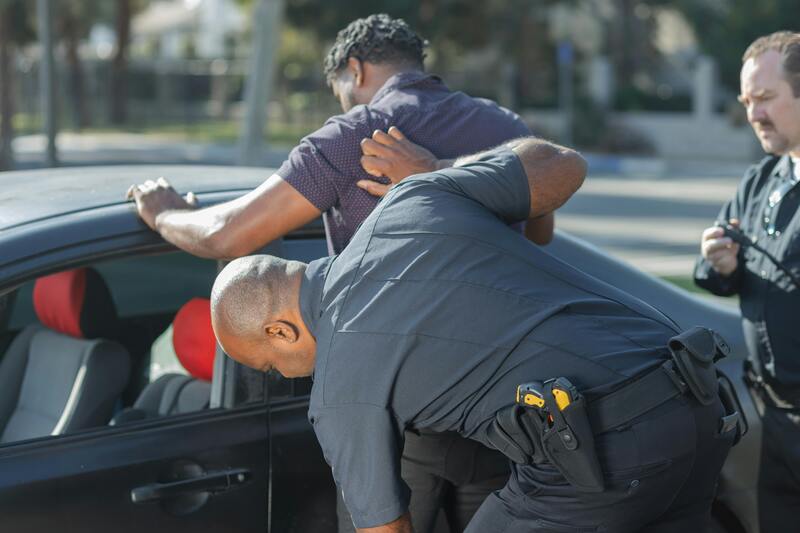
Police in California can’t just tear through your car because they feel like it. When can police search your car: The Fourth Amendment protects you from unreasonable searches, but officers often test those limits. They might claim they “smelled something,” “saw something in plain view,” or had “probable cause.” Sometimes they’re right. Sometimes they’re not.
Knowing when the police can and can’t search your vehicle can make or break your case. At The Nieves Law Firm, we dig into every detail, why the stop happened, what was said, and whether the officer actually had legal grounds to look inside your car. If they crossed the line, we’ll find it and use it to your advantage.

Your Fourth Amendment Rights During Traffic Stops
The Fourth Amendment to the U.S. Constitution protects you from unreasonable searches and seizures. This means police generally need a warrant based on probable cause before they can search your property, including your vehicle.
However, the courts have long recognized that vehicles have a reduced expectation of privacy compared to your home. Cars are mobile, operate on public roads, and can quickly leave the jurisdiction before a warrant is obtained. Because of this, California law allows several exceptions to the warrant requirement specifically for vehicle searches.
When Police Can Legally Search Your Car Without a Warrant
Let’s break down the specific situations where California police can search your vehicle without obtaining a warrant:
1. You Give Consent to Search
The simplest way police can search your car is if you give them permission. If an officer asks, “Do you mind if I take a look in your vehicle?” and you say yes, you’ve just consented to a search.
Here’s the critical part: you have the right to refuse consent. You can politely but firmly tell the officer, “I do not consent to a search of my vehicle.” This refusal cannot be used as evidence against you, and it doesn’t give police probable cause to search anyway.
Your consent must be given freely and voluntarily. If police coerce, threaten, or force you into consenting, any evidence they find will likely be inadmissible in court.
Example: An officer pulls you over for a broken taillight and asks to search your car. You decline. The officer insists and continues searching despite your refusal. Any evidence found during that search could potentially be suppressed because you didn’t freely consent.
2. Police Have Probable Cause
Under what’s known as the “automobile exception,” police can search your vehicle without a warrant if they have probable cause to believe it contains evidence of a crime or contraband.
Probable cause means more than just a hunch; officers need specific, articulable facts that would lead a reasonable person to believe criminal activity is occurring. This could include:
- Observable illegal items: Seeing drugs, weapons, or stolen property in plain view
- Smell of contraband: Detecting the odor of marijuana or other illegal substances
- Suspicious behavior: Actions by you or your passengers that suggest criminal activity
- Reliable information: Tips from confidential informants or other credible sources
- Vehicle location: Your car being in an area known for criminal activity, combined with other factors
Example: During a routine traffic stop, an officer smells a strong marijuana odor coming from your vehicle. This smell can give the officer probable cause to search your car for illegal drugs without needing your consent or a warrant.
How Far Can Police Search With Probable Cause?
When police have probable cause, they can search the entire vehicle, including:
- The passenger compartment
- The trunk
- The glove compartment
- Closed containers like bags, boxes, and suitcases
- Areas where the suspected contraband could reasonably be hidden
However, there are limitations. If police have probable cause to believe you have a stolen flat-screen TV in your vehicle, they can’t search inside a small makeup bag because a TV obviously couldn’t fit there.
3. Search Incident to Lawful Arrest
If police arrest you or any passenger in your vehicle, they can conduct a limited search of your car without a warrant. However, this type of search has specific restrictions.
Police can only search:
- The person being arrested
- The area within that person’s immediate control (the passenger compartment, where they could reach for weapons or destroy evidence)
Important limitation: If you’re handcuffed and secured in the back of a patrol car, police generally cannot search your entire vehicle under this exception because you no longer have access to the interior of the car.
Example: Police arrest you for an outstanding warrant while you’re sitting in your driver’s seat. They can search the passenger compartment and any containers within your reach, but they typically cannot search your locked trunk under this exception alone.
4. Protective Searches During Lawful Detentions
If police reasonably suspect you’re involved in criminal activity, they can temporarily detain you—this is sometimes called a “Terry stop.” During this detention, if officers have reasonable concern for their safety, they can conduct a limited protective search of areas in your vehicle where weapons might be hidden.
This type of search is specifically for officer safety and is limited to:
- Areas of the passenger compartment where weapons could be concealed
- Only if officers have reason to believe you’re dangerous and might access a weapon
5. Inventory Searches of Impounded Vehicles
When police lawfully impound your vehicle, they can conduct an inventory search without a warrant. The stated purposes of these searches are to:
- Protect your property while the vehicle is in custody
- Protect police from claims of lost or stolen property
- Protect officers from potentially dangerous items
Inventory searches must follow standardized procedures and cannot be used as a pretext to search for evidence of a crime. However, if police discover contraband during a proper inventory search, it can be used as evidence against you.
Example: After your DUI arrest, the police tow your car to an impound lot. While conducting a routine inventory of your vehicle’s contents, they find cocaine in your center console. This evidence can likely be used against you because it was discovered during a lawful inventory search.
6. Plain View Doctrine
If a police officer is lawfully in a position to observe your vehicle and sees contraband or evidence of a crime in plain view, they can seize that evidence and may then have probable cause to search further.
For the plain view doctrine to apply:
- The officer must be legally positioned to see the item
- The incriminating nature of the item must be immediately apparent
- The officer must have lawful access to the item
Example: An officer pulls you over for speeding. When you roll down your window, the officer sees a baggie of what appears to be cocaine sitting on your passenger seat. The officer can seize the drugs and likely has probable cause to search the rest of your vehicle.
Do You Have to Show ID During a Traffic Stop?
California is not a “stop and identify” state, meaning you generally don’t have to provide identification just because police ask. However, if you’re the driver of a vehicle that’s been pulled over, you are required by law to show your driver’s license, vehicle registration, and proof of insurance if the officer requests it.
Passengers in a vehicle typically do not have to provide identification unless police have reasonable suspicion that they’ve committed a crime.
What Makes a Traffic Stop Lawful?
Before police can search your vehicle, they first need a legal reason to pull you over. An officer must be able to point to specific facts that gave them reasonable suspicion that:
- You violated a traffic law, or
- You were involved in criminal activity
Valid reasons for traffic stops include:
- Speeding or other moving violations
- Equipment violations (broken taillight, expired registration)
- Erratic driving that suggests impairment
- Matching the description of a suspect vehicle
If the initial traffic stop itself was unlawful, any evidence discovered as a result—including during a vehicle search—could potentially be suppressed.
When Police Need a Warrant to Search Your Car
Despite all these exceptions, there are situations where police must obtain a warrant before searching your vehicle:
- When none of the exceptions apply
- When you’ve refused consent and there’s no probable cause
- When the vehicle is parked at your home and not immediately mobile
- When police want to conduct a more extensive search than the circumstances justify
A valid search warrant must:
- Be signed by a judge
- Be based on probable cause
- Specifically describe the vehicle to be searched
- Specifically describe what the police are searching for
What to Do If Police Want to Search Your Car
If you’re pulled over and police want to search your vehicle, follow these guidelines:
- Stay calm and be polite: Being argumentative or aggressive won’t help your situation
- Don’t physically resist: Even if you believe the search is unlawful, don’t physically interfere
- Clearly state you don’t consent: Say, “I do not consent to a search of my vehicle”
- Don’t answer incriminating questions: You have the right to remain silent beyond providing basic identification
- Remember details: Take note of the officer’s name, badge number, and what happened
- Contact an attorney: As soon as possible after the incident, speak with a criminal defense lawyer
Challenging an Unlawful Vehicle Search
If police searched your vehicle illegally, you’re not powerless. An experienced criminal defense attorney can file a motion to suppress evidence under Penal Code 1538.5 PC.
During a suppression hearing, your attorney will:
- Challenge the legality of the initial traffic stop
- Examine whether the police had probable cause or another valid justification for the search
- Question the officers about inconsistencies in their testimony
- Present evidence that your rights were violated
If the judge agrees that the search was unlawful, they can suppress (exclude) the evidence obtained during that search. Without that evidence, the prosecution may have insufficient proof to continue with the charges, potentially leading to dismissal of your case.
Common Grounds for Challenging Vehicle Searches
Your attorney might successfully challenge a vehicle search by arguing:
- No probable cause existed: The officer lacked specific facts to justify the search
- Consent was coerced: You didn’t freely and voluntarily agree to the search
- Search exceeded permissible scope: Police searched areas beyond what the law allowed
- Unlawful traffic stop: The initial stop lacked reasonable suspicion
- False or exaggerated claims: The officer’s stated reasons for the search don’t hold up under scrutiny
Real-World Example: When a Search Goes Too Far
Police pull over Marcus for failing to signal a lane change. The officer asks to search the vehicle. Marcus politely refuses. The officer then claims he smells marijuana (though none is present) and searches the entire car, including a locked briefcase in the trunk. Inside the briefcase, police find unrelated evidence of a crime.
In this case, several issues could lead to the suppression of evidence:
- If no marijuana smell actually existed, the officer lacked probable cause
- Even with probable cause for marijuana, searching a locked briefcase might exceed the scope if marijuana couldn’t fit inside
- The entire search might be invalidated if the court finds the claimed marijuana smell was fabricated
How The Nieves Law Firm Can Protect Your Rights
If you believe police illegally searched your vehicle, or if you’re facing charges based on evidence obtained during a traffic stop, The Nieves Law Firm can help.
Our experienced criminal defense team will:
- Thoroughly review the circumstances of your traffic stop and search
- Identify any violations of your Fourth Amendment rights
- File motions to suppress illegally obtained evidence
- Challenge officer testimony and credibility
- Fight aggressively for dismissal or reduction of charges
We’ve successfully defended countless clients against charges stemming from vehicle searches, and we know how to spot constitutional violations that other attorneys might miss.
Don’t let an illegal search ruin your future. Contact The Nieves Law Firm today for a complimentary consultation. We’re available 24/7 to discuss your case and start building your defense immediately.
